
 By ScorpioKnights72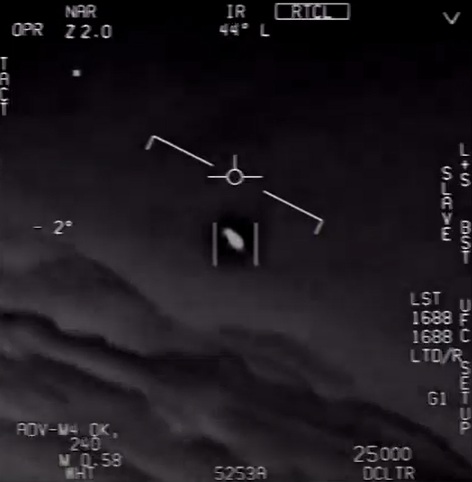
The Gimbal and Gofast incidents are two well-known UFO (Unidentified Flying Object) encounters involving U.S. military pilots associated with the USS Theodore Roosevelt carrier. Both incidents came to light in the public domain after the U.S. Department of Defense released videos in 2017 and 2020.
Gimbal Incident (2015)
The Gimbal video, filmed in 2015, was captured by a U.S. Navy fighter pilot using an infrared targeting camera. The video shows a UFO hovering in the sky while rotating on its axis. The object is seen as a dark, oblong shape, and the video is notable because of the apparent lack of conventional flight characteristics such as wings or propulsion systems.
-
Details:
- The video was filmed by a pilot from the U.S. Navy’s VF-41 Black Aces squadron
during a training exercise off the East Coast of the U.S.
- The object in the video is tracked by the fighter pilot’s infrared camera, and the pilot can be heard expressing surprise at the object’s movements, noting that it is “spinning” and moving in ways that conventional aircraft do not.
- The object appears to accelerate quickly and perform rapid directional changes, which defy the capabilities of known aircraft at the time.
-
Aftermath:
- The Gimbal video was one of three released by the Pentagon in 2017 as part of its disclosure of previously classified UFO footage, including the Flir1 (released in 2004) and Gofast (2015) videos.
- While no official explanation was provided for the object’s origin or nature, the U.S. military and intelligence agencies acknowledged the footage as authentic. The Pentagon’s UAP (Unidentified Aerial Phenomena) task force later expanded, focusing on identifying these unexplained sightings.
Gofast Incident (2015)
The Gofast video, also recorded in 2015, is another piece of footage filmed by U.S. Navy pilots during a training mission, this time off the coast of Florida. The video depicts a fast-moving object that appears to accelerate rapidly across the ocean’s surface.
-
Details:
- The object in the Gofast video is filmed using a targeting camera mounted on an aircraft. The object can be seen moving at incredibly high speeds just above the ocean surface.
- Unlike the Gimbal video, the Gofast footage is more focused on the rapid movement of the object, which is seen streaking across the water.
- The object is unclear in shape, but it does not appear to be a conventional aircraft, drone, or missile. The pilots can be heard expressing surprise at the speed of the object, with one pilot commenting, “Look at that thing, dude! It’s going against the wind. The wind is 120 knots to the west.”
-
Aftermath:
- Similar to Gimbal, the Gofast video was released publicly in 2020 as part of an official Pentagon disclosure of previously classified footage.
- There was no conclusive identification or explanation provided by military or government authorities regarding the object’s nature. The object’s movement was noted to defy the expected flight mechanics of any known aircraft at the time.
Key Points
- Both incidents highlight unexplained phenomena captured by military-grade technology, with objects exhibiting flight characteristics beyond the capabilities of known human-made aircraft.
- These incidents sparked public interest and further questions regarding the nature of Unidentified Aerial Phenomena (UAPs), leading to the U.S. government’s formation of a task force to study such encounters.
- The release of these videos is part of a broader move by the Pentagon and military officials to increase transparency about UAPs and possibly acknowledge that there may be aerial phenomena that cannot yet be explained by conventional science.
In the years following these incidents, public curiosity about UAPs has continued to grow, and discussions about the possibility of extraterrestrial life or advanced technologies from other nations have become more common.